The Weight Tax: The Lightest and Heaviest Backpacking Food
Two trail meals can carry the exact same calories while one weighs twice as much. Across 284 freeze-dried and dehydrated pouches, that gap adds up to roughly 4 kg of dead weight over a week. Here is the lightest trail food by the numbers - and the heavy traps to leave at home.

Affiliate disclosure: this page contains affiliate links. If you buy through one, FoodEverest may earn a commission at no extra cost to you, whether through the Amazon Associates Program or another brand's affiliate program. Full disclosure.
lightest to heaviest
for the same energy
a 7-day trip
on the numbers
Food is usually the heaviest thing in a multi-day pack, and it is the one place people quietly overpay in grams. Two dinners can deliver identical calories while one weighs nearly twice as much - because what you are really carrying up the hill is water and packaging, not fuel. The number that sorts the two is calorie density: calories divided by the meal's dry food weight.
The weight tax, in one pack
Take a standard week out: 7 days, 3,000 calories a day, 21,000 calories of food to carry. Pack it entirely from the densest end of our data and it weighs about 3.2 kg. Pack the exact same calories from the least dense end and it is roughly 7.2 kg. Same fuel, 4 kg (9 lb) of difference on your back.
The lightest backpacking meals, ranked
Ranked by calories per ounce (the ultralight shorthand for calorie density), these give you the most fuel for the least carried weight. It is not a coincidence that the top of this list leans on fat: fat carries more than twice the calories per gram of carbs or protein, so the densest meals are the ones built around it.
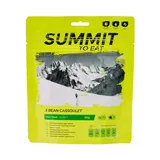
For density you can actually eat as dinner, Expedition Foods 5 Bean Cassoulet is one of the densest mains in our data at ~167 cal/oz (589 kcal/100g), and it still carries real protein rather than being pure fat and starch. See every Expedition Foods meal in our Expedition Foods data guide.
| # | Meal | Cal/oz · kcal/100g | Calories | Net wt oz · g |
|---|---|---|---|---|
| 1 | 185 653 kcal/100g | 620 | 3.4 oz95 g | |
| 2 | 177 623 kcal/100g | 380 | 2.2 oz61 g | |
| 3 | 167 589 kcal/100g | 601 | 3.6 oz102 g | |
| 4 | 167 589 kcal/100g | 1001 | 6.0 oz170 g | |
| 5 | 164 579 kcal/100g | 1040 | 6.3 oz180 g | |
| 6 | 163 576 kcal/100g | 818 | 5.0 oz142 g | |
| 7 | 163 574 kcal/100g | 694 | 4.3 oz121 g | |
| 8 | 163 573 kcal/100g | 1100 | 6.8 oz192 g | |
| 9 | 162 572 kcal/100g | 810 | 5.0 oz142 g | |
| 10 | 161 568 kcal/100g | 920 | 5.7 oz162 g | |
| 11 | 159 559 kcal/100g | 850 | 5.4 oz152 g | |
| 12 | 158 556 kcal/100g | 350 | 2.2 oz63 g |
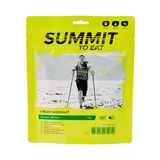
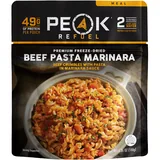
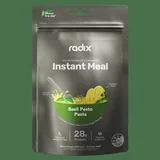
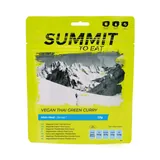
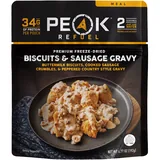
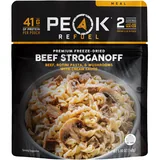
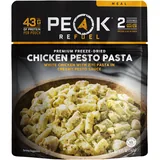
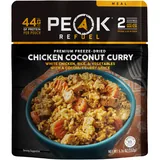
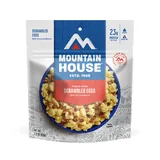
Want the full sortable list? Every meal is ranked on the calorie-density page, and you can build a whole trip against a weight target in the trip planner.
The heavy traps
The other end of the list is where the tax hides. These are not bad meals - some are tasty and cheap - but per calorie they are the heaviest things you can put in a pack. Ramen and plain grain-and-bean bowls are mostly starch and water weight, so their calories-per-gram sink to the bottom.
- 83cal/oz Campers Pantry Indian Chicken Pilaf (XL)
- 83cal/oz Trailtopia Ramen Noodles - Beef flavored with Vegetables and Mushrooms
- 84cal/oz Campers Pantry Indian Chicken Pilaf (1x serve)
- 84cal/oz Trailtopia Ramen Noodles - Chicken flavored with Broccoli
- 85cal/oz Backpacker's Pantry Three Sisters Southwestern Quinoa & Beans
- 88cal/oz Trailtopia Ramen Noodles - Curry
The lightest brands, on average
Zoom out from single meals and some brands are simply built denser than others across their whole lineup. Averaged over every meal we have for each brand, here is who packs the most calories per ounce.
| # | Brand | Avg cal/oz | Meals |
|---|---|---|---|
| 1 | Peak Refuel | 145 | 20 |
| 2 | Expedition Foods | 140 | 23 |
| 3 | Radix Nutrition | 137 | 5 |
| 4 | Mountain House | 131 | 41 |
| 5 | Wild Zora | 130 | 7 |
| 6 | Packit Gourmet | 125 | 26 |
| 7 | Tent Meals | 124 | 5 |
| 8 | LyoFood | 120 | 31 |
| 9 | Adventure Food | 119 | 22 |
| 10 | Strive Food | 117 | 7 |
| 11 | Good To-Go | 116 | 14 |
| 12 | Campers Pantry | 116 | 15 |
| 13 | Backpacker's Pantry | 116 | 33 |
| 14 | Trailtopia | 107 | 35 |
How we ranked
Calorie density = total calories ÷ net food weight, using each brand's published net weight (not the padded shipping figure). Data covers 284 freeze-dried and dehydrated meals across 14 brands, captured 2026-07-28. The 7-day figure assumes 3,000 kcal a day - a mid-range backcountry appetite; scale it to your own and the gap scales with it. Prices and specs are not live; we link to brand pages so you can confirm before buying.
Found a number that changed how you pack? Send it on.