Best Emergency Food Supply 2026: Winners by the Numbers
The best emergency food supply for 2026, picked on verified figures - cheapest calories, most protein, most calories per gram, and the kits that actually deliver a full 2,000-calorie day.

"Emergency food supply" covers everything from a three-day bucket by the door to a year of #10 cans in the basement. What almost none of it is sold on is the one number that decides whether it keeps you going: calories per person, per day. So instead of ranking on taste or brand loyalty, we ranked on published, first-party figures - cost, protein, calorie density, shelf life, and real calories per day - and named the single product that wins each. If you want to see where any specific kit lands, our emergency food supply comparison puts all 58 of them side by side.
At a glance
| Category | Winner | The number | Price |
|---|---|---|---|
| Best value - complete kit | Emergency Essentials 3-Month Emergency Food Kit | $3.35 per 1,000 kcal | $569.97 |
| Cheapest calories - bulk staple | Emergency Essentials White Rice Large #10 Can | $2.13 per 1,000 kcal | $17.99 |
| Highest protein | Mountain House Chicken & Mashed Potatoes | 96 g protein / 1,000 kcal | $12.49 |
| Most calorie-dense meal | Beyond Outdoor Meals Breakfast Skillet Pouch | 5.6 kcal per gram | $14.95 |
| Fills a full 2,000-cal day | ReadyWise Emergency Food Supply range | 9 kits clear 2,000 kcal/day | 3-Month: $839.98 |
How to choose an emergency food supply
Five things actually separate a good emergency food supply from an expensive shelf of boxes. In rough order of importance:
1. Calories per day - not "servings"
A "serving" is not a fixed amount of food, so a kit can advertise a big serving count while each serving is small. Divide the kit's total calories by the days it claims to feed one person: humanitarian agencies plan emergency rations at about 2,100 kcal per person per day (the UNHCR standard and the Sphere Handbook minimum), and 2,000 is the round everyday figure. Plenty of kits land well under that - which is exactly what the full comparison is built to expose.
2. Cost per 1,000 calories
Sticker price tells you little when kits hold wildly different amounts of food. Cost per 1,000 kcal is the fair comparison. Complete kits run roughly $3.35 to $4.50 per 1,000 kcal; plain dehydrated staples like rice and beans are about a third of that. The trade-off is convenience - a kit is closer to ready to eat, a staple needs cooking, water and seasoning.
3. Shelf life - and its fine print
The longest verified claim is up to 30 years, on dehydrated staples; prepared entrees are more commonly rated 25. But every one of those numbers is conditional on cool, dry, dark storage. Heat is the enemy: food that keeps for decades in a basement can drop to a few years in a hot garage. Store it in the coolest spot you have, and treat "25 years" as a best case, not a guarantee.
4. Weight, if you might have to move
If your plan is to shelter in place, weight barely matters - buy the cheapest adequate calories. If you might have to carry it (a bug-out bag), calorie density - calories per gram - is what keeps the load down. That is a very different pick from the cheapest bucket.
5. How much to store, and water
Work in calories: people × days × roughly 2,000 calories. One person for two weeks is about 28,000 calories. And food is only half of it - store one gallon of water per person per day for drinking and basic cooking, the standard preparedness figure, separately from the food.
The category winners
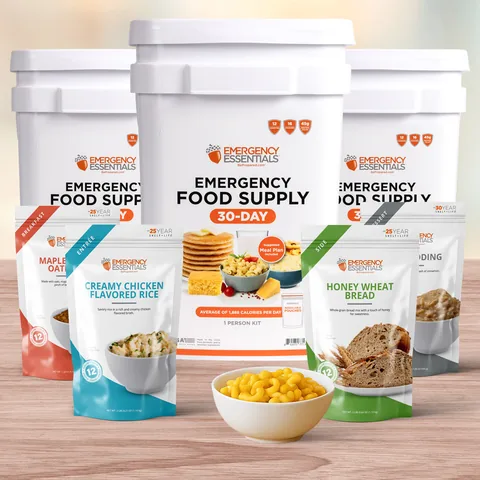
Emergency Essentials 3-Month Emergency Food Kit
$3.35 per 1,000 kcal
The cheapest calories of any complete one-person kit we priced - and it holds that $3.35 per 1,000 kcal identically from its 1-month up to its 1-year size. The brand states 1,888 calories and 45 g of protein per day.
Runner-up: ReadyWise, whose best value SKU is about $3.88 per 1,000 kcal.
$569.97 MSRP (often ~$407 on sale)
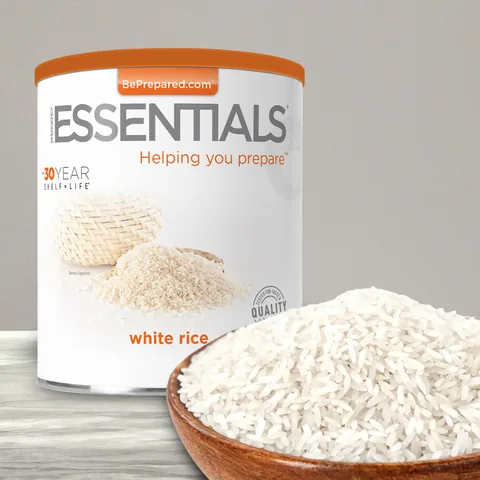
Emergency Essentials White Rice Large #10 Can
$2.13 per 1,000 kcal
Store plain staples and calories get far cheaper: a #10 can of white rice is about $2.13 per 1,000 kcal (8,460 calories, 47 servings) - roughly a third the cost of a prepared kit. We picked rice over sugar (technically cheaper) because it is storage a reader actually cooks with, not an ingredient.
Runner-up: My Patriot Supply Long Grain White Rice #10 can, about $2.25 per 1,000 kcal.
$17.99 MSRP ($15.99 on sale = $1.89)
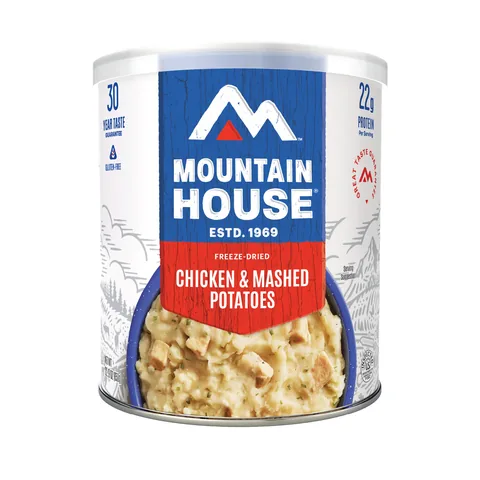
Mountain House Chicken & Mashed Potatoes
96 g protein / 1,000 kcal
The most protein per calorie of any real, composed entree we checked - 44 g of protein in a 460-calorie pouch. Bulk #10 cans of plain freeze-dried meat score higher, but they are an ingredient to cook with, not a meal.
Runner-up: Mountain House Homestyle Chicken Noodle Casserole, about 68 g protein per 1,000 kcal.
$12.49
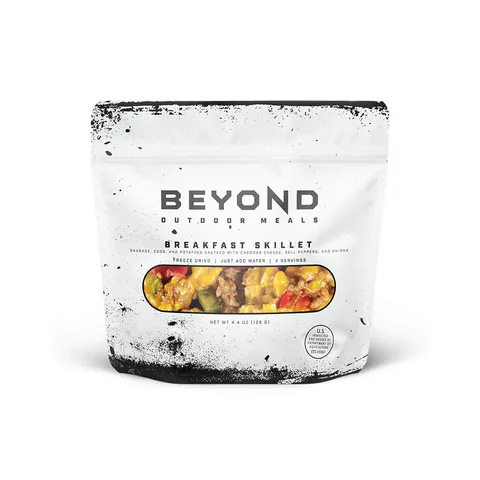
Beyond Outdoor Meals Breakfast Skillet Pouch
5.6 kcal per gram
The most calories per gram of any complete meal - 710 calories in a 4.4 oz pouch - so it is the pick when pack weight matters, like a bug-out bag. Pure butter or egg powder is denser, but you cannot live on an ingredient.
Runner-up: Mountain House Scrambled Eggs with Bacon #10 can, about 5.6 kcal/g, for a name-brand pick.
$14.95
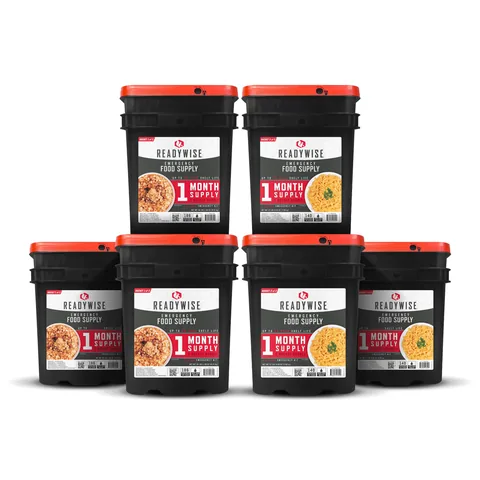
ReadyWise Emergency Food Supply range
9 kits clear 2,000 kcal/day
ReadyWise has more one-person kits that actually clear 2,000 calories a day (nine) than any other brand, so you are less likely to end up on a starvation ration. Its 3-Month supply works out to about 2,085 calories per person per day.
Runner-up: The Ready Store, with eight - though three are the same kit reissued under in-house labels.
3-Month: $839.98
Frequently asked
What is the best emergency food supply?
There is no single best - it depends on what you optimise for. For the cheapest calories in a complete kit, Emergency Essentials is about $3.35 per 1,000 kcal. For the most protein per calorie, Mountain House Chicken & Mashed Potatoes leads real entrees at about 96 g per 1,000 kcal. For the most calories per gram of a full meal, the Breakfast Skillet pouch (Beyond Outdoor Meals) at about 5.6 kcal/g. And for kits that reliably deliver a full 2,000-calorie day, ReadyWise has the most.
What is the cheapest emergency food per calorie?
Plain dehydrated staples are far cheaper than prepared kits. A #10 can of white rice runs about $2.13 per 1,000 kcal, versus roughly $3.35 to $4.50 per 1,000 kcal for a complete one-person kit. The trade-off is that staples need cooking, water and seasoning, where a kit is closer to ready to eat.
How many calories should an emergency food supply have per day?
Humanitarian agencies plan emergency rations at about 2,100 kcal per person per day (the UNHCR emergency standard and the Sphere Handbook minimum); a round 2,000 kcal is the everyday reference. Many kits are sold by "servings" rather than calories and quietly fall short, so it is worth dividing the total calories by the days a kit claims to feed one person.
How long does emergency food really last?
The longest verified manufacturer claim is up to 30 years, and only on dehydrated staples (rice, beans, sugar) stored cool and dry; prepared entrees are more commonly rated 25 years. All of these figures are conditional - heat shortens them dramatically, so the same food that lasts decades in a cool basement can drop to a few years in a hot garage.
How much emergency food do I actually need?
Work in calories, not "servings": multiply the number of people by the number of days by about 2,000 calories. A two-week supply for one person is roughly 28,000 calories. Store water separately - the standard planning figure is one gallon per person per day for drinking and basic cooking.
Awards are a shortcut. To see where any specific kit lands, compare all 58 kits on calories per day, cost and shelf life - sortable and filterable - read one brand's review at a time, or build a calorie target from single pouches and cans in the trip planner.
How we picked and verified
Each winner was chosen on a single, published, first-party number - price per 1,000 kcal, protein per 1,000 kcal, calories per gram, or verified calories per person per day - then re-checked against the brand's own live product page on September 16, 2026, with the exact on-page figure recorded. We deliberately excluded raw ingredients (plain freeze-dried meat, butter or egg powder) from the "meal" categories: they can top a ratio while being something you cook with, not a meal you eat. The calorie, shelf-life and water standards come from the UNHCR emergency handbook, the Sphere Handbook, Ready.gov and USU Extension. Prices are each brand's own MSRP; Emergency Essentials and ReadyWise both run a standing discount, noted where it applies, and prices are not live - follow any link to confirm before buying. Our authority here is the database and the live check, not a taste test: we do not claim to have eaten these. No brand paid for placement, and there are no affiliate links on this page.
Found a number that changed how you pack? Send it on.