The Best Fluffy Pancakes recipe you will fall in love with. Full of tips and tricks to help you make the best pancakes.

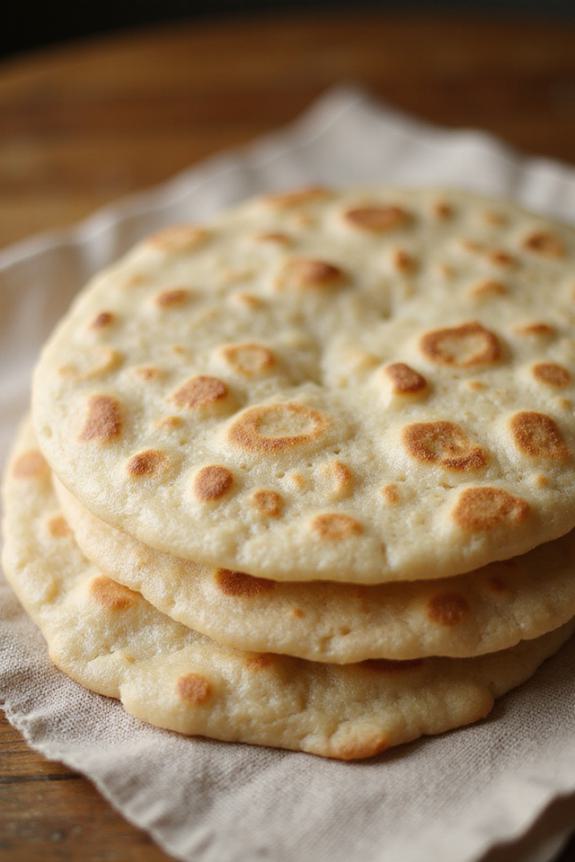
Why You’ll Love this Soft Gluten-Free Roti
When you’re craving soft, pillowy roti but gluten isn’t your friend, this recipe becomes your kitchen superhero.
I’ve cracked the code on making rotis that actually bend without breaking — no cardboard texture here. The secret? That magical combo of cassava flour, tapioca starch, and brown rice flour creates the perfect chew.
Plus, psyllium husk works overtime to bind everything together like gluten would. These rotis puff beautifully on the pan and stay tender for hours.
No more missing out on curry-scooping, wrap-making, or just enjoying warm bread straight from the stove.
Ingredients for Soft Gluten-Free Roti
Getting the right ingredients for these soft, bendy rotis is simpler than you might think. I keep most of these flours in my pantry because they’re total game-changers for gluten-free baking, and honestly, once you make these rotis, you’ll want to have everything on hand for those spontaneous curry nights.
Ingredients:
- Cassava flour: 1 cup (120g)
- Tapioca starch: ¼ cup (30g)
- Brown rice flour: ⅓ cup (52g)
- Psyllium husk: 1 teaspoon (5g)
- Baking powder: 2 teaspoons (8g)
- Pink salt: ½ teaspoon (3g)
- Olive oil: 1 tablespoon (15ml)
- Hot water: 2½ cups (590ml)
The psyllium husk is your secret weapon here — it’s what makes these rotis actually pliable instead of cracking like autumn leaves. You can find it in the health food section or order online, and a little bag lasts forever.
Don’t skip the hot water either; it helps activate the psyllium and makes the dough way more workable. If you can’t find pink salt, regular salt works just fine — I just like the subtle flavor difference.
The cassava flour does most of the heavy lifting for texture, while tapioca starch adds that perfect chew. Brown rice flour brings everything together with a slightly nutty backdrop that pairs beautifully with curries.
How to Make this Soft Gluten-Free Roti
Making these rotis is honestly therapeutic once you get into the rhythm. Start by whisking together all your dry ingredients in a large bowl: 1 cup cassava flour (120g), ¼ cup tapioca starch (30g), ⅓ cup brown rice flour (52g), 1 teaspoon psyllium husk (5g), 2 teaspoons baking powder (8g), and ½ teaspoon pink salt (3g). Make sure everything’s evenly distributed — no psyllium clumps hiding in corners.
Then add 1 tablespoon olive oil (15ml) and slowly pour in 2½ cups hot water (590ml), stirring as you go. The dough will look shaggy and weird at first, but don’t panic. That’s totally normal.
Now comes the kneading, and this is where the magic happens. Work the dough for about 5 minutes until it becomes smooth and pliable — it should feel soft but not sticky. If it’s too wet, sprinkle in a bit more cassava flour; too dry, add warm water a tablespoon at a time.
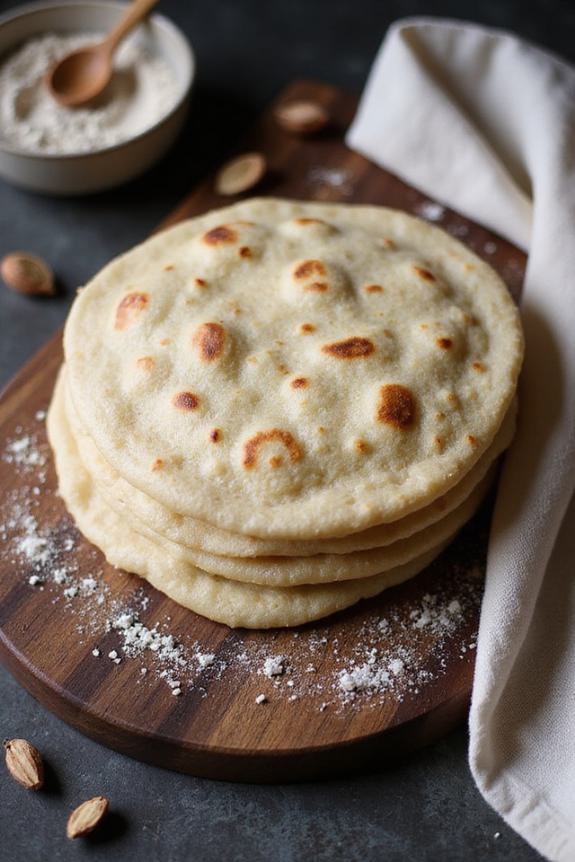
Divide the dough into 8 equal portions and roll each one out on a lightly floured surface until it’s about the thickness of a tortilla. Heat a non-stick pan over medium heat and cook each roti for about 2 minutes per side, until you see light golden spots forming. They should puff slightly and feel tender when you press them gently.
Stack them up and cover with a clean kitchen towel to keep them soft — trust me, they taste best when they’re still warm and practically melt in your mouth. For those who prefer automated mixing and consistent results, a gluten free bread maker can also handle similar gluten-free dough preparations with less hands-on effort.
Substitutions & Variations
What if cassava flour isn’t your thing, or you’re staring at an empty pantry wondering how to make this work? I’ve got you covered.
Swap cassava flour for equal amounts of almond or coconut flour, though you’ll need less water—maybe 1½ cups instead.
No tapioca starch? Cornstarch works fine.
Brown rice flour can be replaced with white rice flour or oat flour.
Don’t have psyllium husk? Skip it, but expect slightly less binding power.
Want flavor? Add a pinch of garlic powder or dried herbs.
Each swap changes the texture slightly, but they’re all delicious.
What to Serve with Soft Gluten-Free Roti
Three perfect partners come to mind when I think about what pairs beautifully with these soft, pillowy rotis.
First, creamy curries — whether it’s dal, butter chicken, or a simple vegetable curry — because these rotis love soaking up every drop of sauce.
Second, grilled meats and roasted vegetables work wonderfully for wrapping and scooping.
Third, I can’t resist using them for breakfast with scrambled eggs or avocado.
Honestly, they’re versatile enough for Mediterranean dips like hummus too. The neutral flavor means they’ll complement whatever you’re craving.
Perfect little edible spoons, really.
Final Thoughts
After spending time perfecting this recipe, I can honestly say these gluten-free rotis have become my go-to flatbread for almost everything.
They’re soft, pliable, and honestly taste better than some wheat versions I’ve tried. The psyllium husk really makes the magic happen — it gives that perfect chewy texture without any weird aftertaste.
What I love most is how forgiving this recipe is. Even if your dough feels slightly off, it usually works out fine.
These rotis freeze beautifully too, so I always make extra. Trust me, once you nail this technique, you’ll never buy store-bought again.