The Best Fluffy Pancakes recipe you will fall in love with. Full of tips and tricks to help you make the best pancakes.

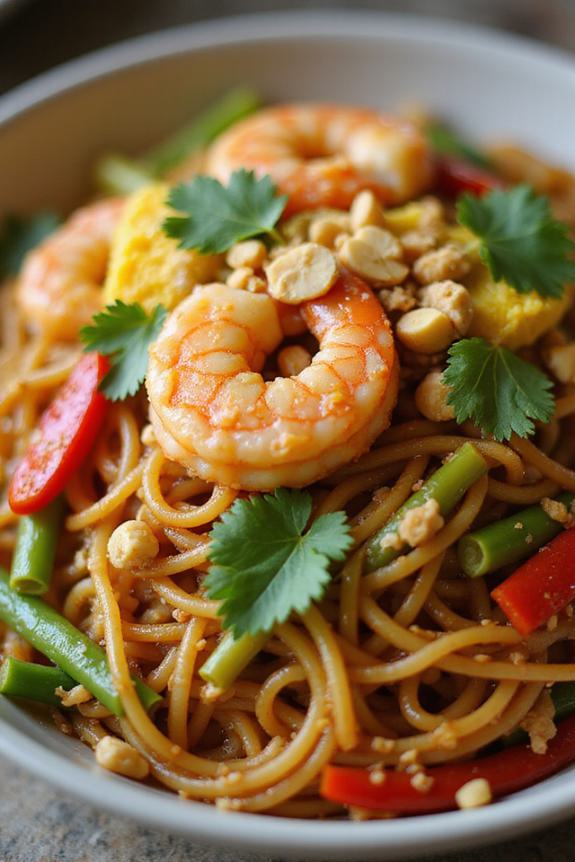
Why You’ll Love this Gluten-Free Pad Thai
Whether you’re avoiding gluten by choice or necessity, this pad thai delivers all the tangy, sweet, and savory flavors you’re craving without any compromise.
I love how the rice noodles actually hold their texture better than wheat-based ones — they don’t get mushy when you toss them with that glossy sauce. The secret’s in the gluten-free tamari, which gives you that deep, umami-rich flavor without the wheat.
Plus, everything comes together in one pan in just 25 minutes. No fancy techniques, no hard-to-find ingredients. Just straightforward, satisfying comfort food that happens to be gluten-free.
Ingredients for Gluten-Free Pad Thai
This pad thai keeps things delightfully simple with ingredients you can actually find at your regular grocery store. No hunting down exotic sauces or specialty noodles that cost more than your monthly coffee budget. The beauty here is that most Thai dishes are naturally gluten-free anyway — it’s just a matter of swapping out regular soy sauce for tamari and you’re golden.
Ingredients:
- 8 oz (225g) rice noodles
- 1 tbsp (15ml) vegetable oil
- 1 cup (115g) bean sprouts
- 1 red bell pepper, thinly sliced
- 2 cloves garlic, minced
- 1 cup (115g) shrimp (or tofu)
- 2 eggs
- 3 tbsp (45ml) fish sauce
- 2 tbsp (30ml) gluten-free tamari
- 2 tbsp (30ml) rice vinegar
- 3 tbsp (45g) brown sugar
- ½ tbsp (7.5g) chili sauce
- Peanuts and cilantro for garnish
The tamari is your secret weapon here — it’s basically soy sauce’s gluten-free cousin, made with just soybeans and salt. I always double-check the label because some brands sneak wheat in there. For the rice noodles, grab the flat, wide ones if you can find them. They’re sturdier and won’t turn to mush when you toss everything together. And honestly? Fresh bean sprouts make a world of difference over the sad, soggy ones that have been sitting around. They add that perfect crunch that makes each bite feel alive.
How to Make this Gluten-Free Pad Thai
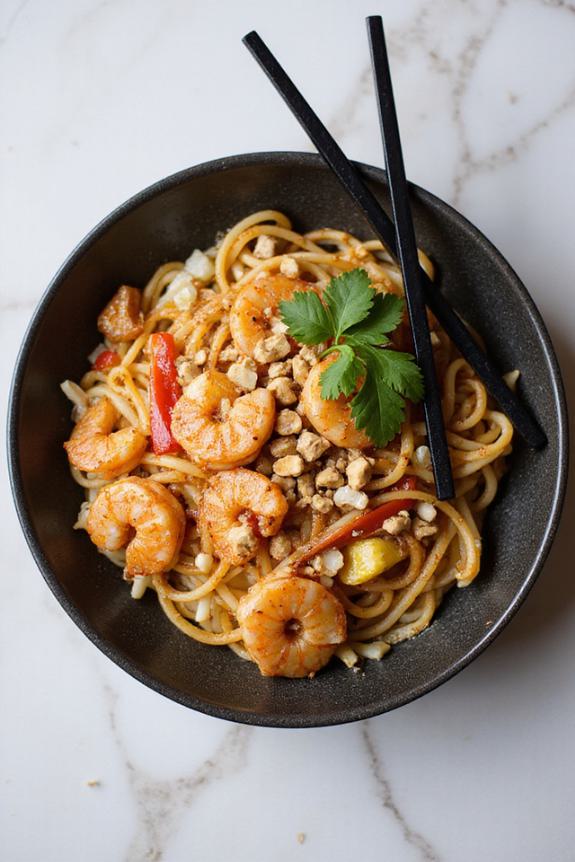
Start by cooking your 8 oz (225g) of rice noodles according to the package directions, then rinse them with cold water to stop the cooking process. This step is essential — nobody wants mushy noodles that fall apart the second you start tossing them around.
While those are cooking, get your sauce ready by whisking together 3 tbsp (45ml) fish sauce, 2 tbsp (30ml) gluten-free tamari, 2 tbsp (30ml) rice vinegar, 3 tbsp (45g) brown sugar, and ½ tbsp (7.5g) chili sauce. Having everything mixed and ready to go makes the actual cooking part way less chaotic.
Heat 1 tbsp (15ml) vegetable oil in your largest skillet — this isn’t the time for your cute little pan. Toss in 1 cup (115g) bean sprouts, your thinly sliced red bell pepper, and 2 minced garlic cloves. Let them sizzle and get fragrant for about 2-3 minutes, then add 1 cup (115g) shrimp or tofu and cook until the shrimp turns pink or the tofu gets a little golden.
Push everything to one side of the pan, crack in 2 eggs, and scramble them right there in the empty space. Once they’re just set, mix everything together.
Add your cooked noodles to the pan, pour that sauce over everything, and start tossing like your life depends on it. You want every strand coated and glistening. Cook for about 2 minutes, stirring constantly so nothing sticks or burns. The noodles should absorb most of the sauce and everything should look glossy and delicious.
If you’re making larger batches regularly, a gluten-free stand mixer can help you prepare sauce components and mix ingredients more efficiently for meal prep sessions.
Serve immediately with crushed peanuts and fresh cilantro on top — the contrast between the warm, savory noodles and cool, bright herbs is what makes this dish sing.
Substitutions & Variations
Since this recipe is basically a template for deliciousness, you can swap out ingredients based on whatever’s hiding in your fridge or your dietary needs.
I love throwing in snap peas, carrots, or mushrooms instead of bell peppers. No shrimp? Chicken, beef, or extra-firm tofu work beautifully.
Vegetarians can skip the fish sauce and double up on tamari — still tastes incredible.
Want more heat? I always add extra chili sauce because life’s too short for bland food. Fresh lime juice instead of rice vinegar gives it a brighter kick.
Even crushed cashews work when peanuts aren’t available.
What to Serve with Gluten-Free Pad Thai
Now that you’ve got your perfect pad thai down pat, let’s talk about what makes it even better on the plate.
I love serving this with simple sides that won’t compete with all those bold flavors. Fresh cucumber slices with a sprinkle of salt cut through the richness beautifully.
Spring rolls — especially the fresh kind with crisp veggies — add nice textural contrast. A light Thai salad like som tam works too, though I’d go easy on the dressing since your pad thai’s already packed with flavor.
Sometimes simple steamed broccoli does the trick perfectly.
Final Thoughts
There’s something pretty magical about nailing a gluten-free pad thai that tastes just as good as any restaurant version — maybe even better because you’ve got complete control over every ingredient.
I love knowing exactly what goes into my bowl, especially when dining out feels like playing ingredient roulette. This recipe delivers those classic sweet, salty, and tangy flavors without any gluten sneaking in.
The tamari keeps everything safe, while the rice noodles give you that perfect chewy texture.
Trust me — once you make this at home, takeout won’t hit the same.